 Ropeway only
Ropeway e-ticket
One way or return
- Valid
- 90 days
- Stop-overs
- Any station
- Cancel
- Up to 24 hours
Guides
Language
EnglishCurrency
US dollar · $GetYourGuide uses the currency you choose.
Guide · Ropeway
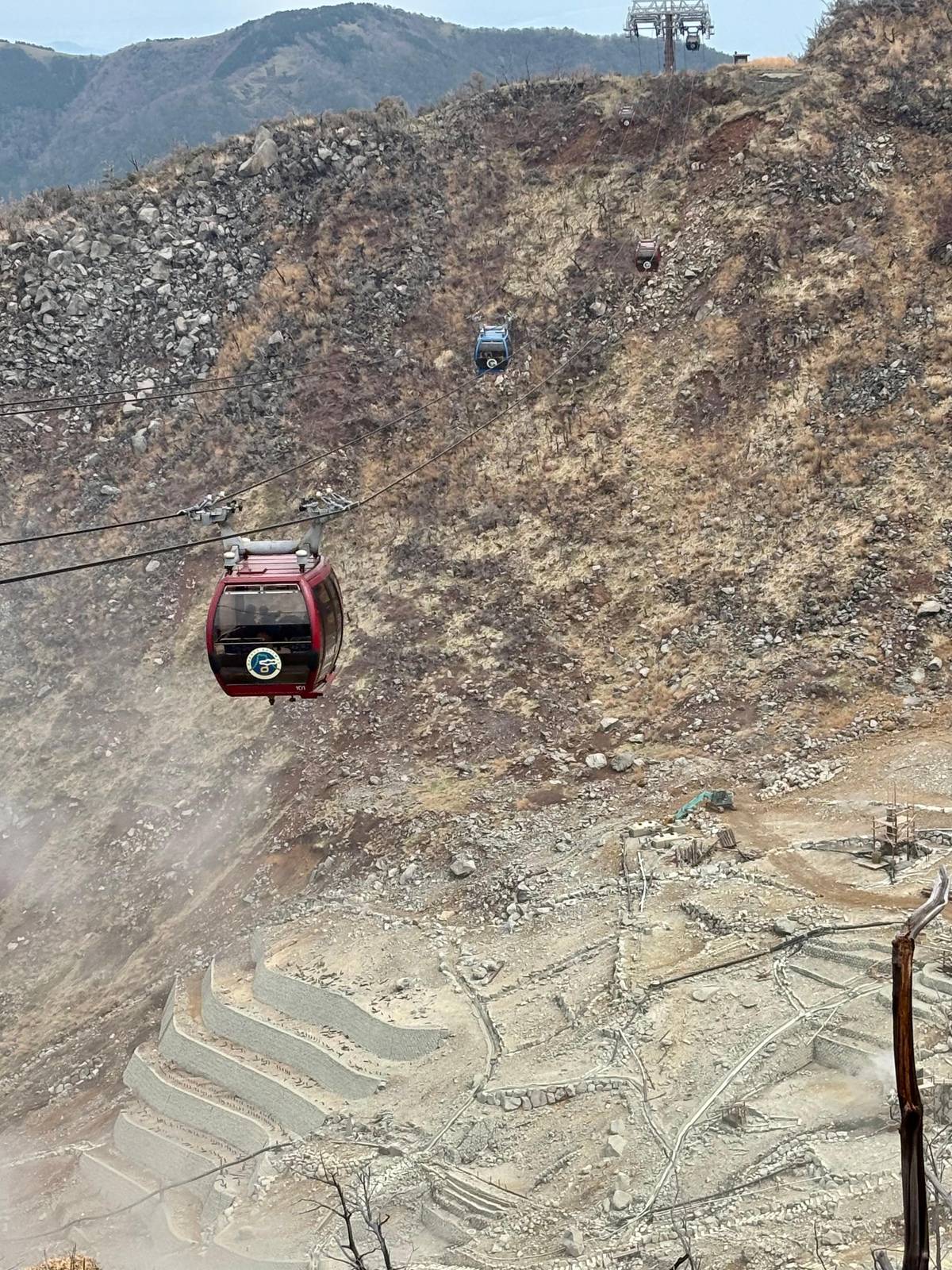
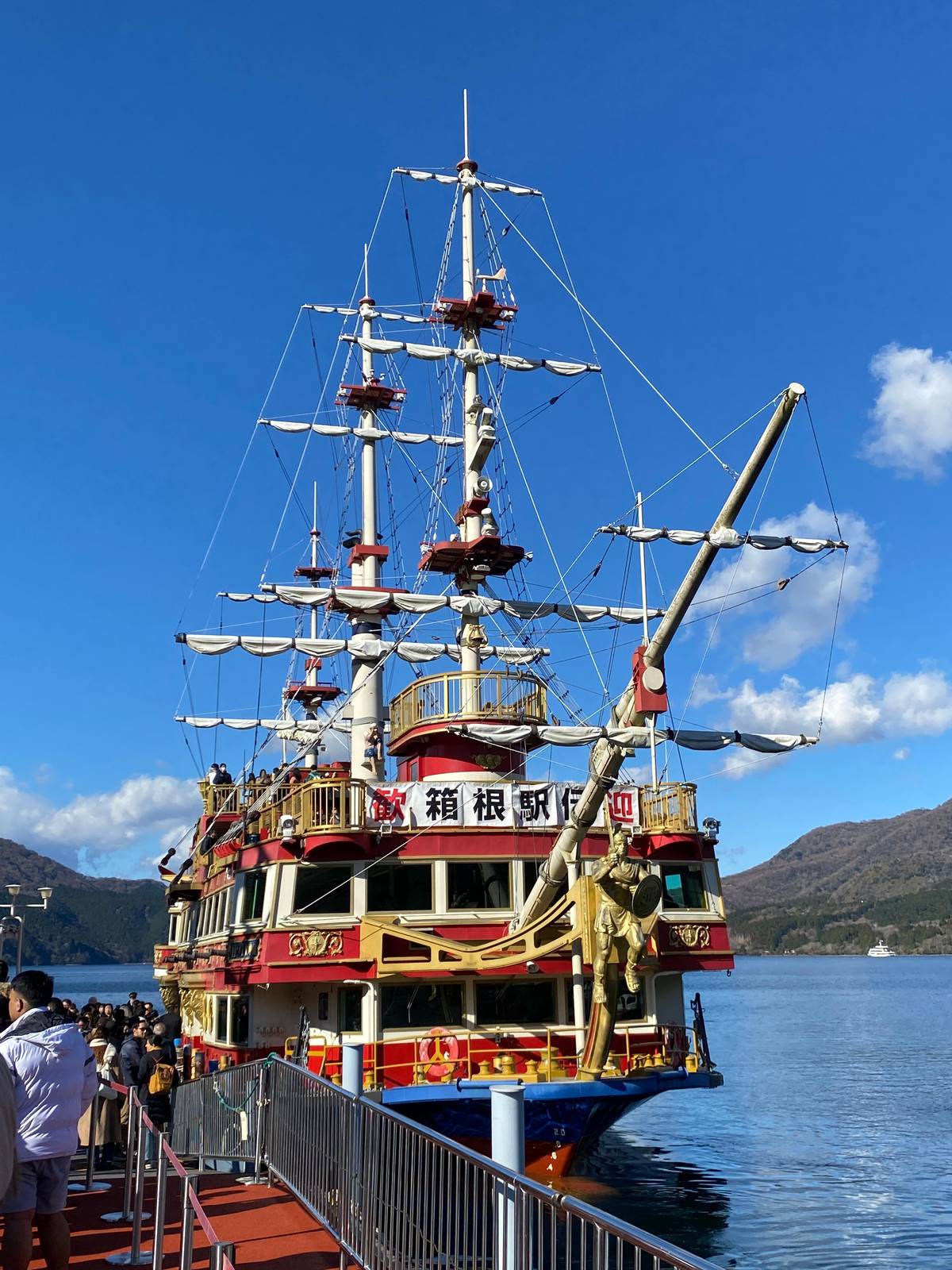
The Hakone Ropeway carries you over a steaming volcanic valley and down to the boats on Lake Ashi. Here are its four stations, the hours, the fares, the black eggs and what can stop the gondolas.
Editorial team, hakonesightseeingcruise.comUpdated October 22, 2026read in 6 minutes44 sources
Quick answer
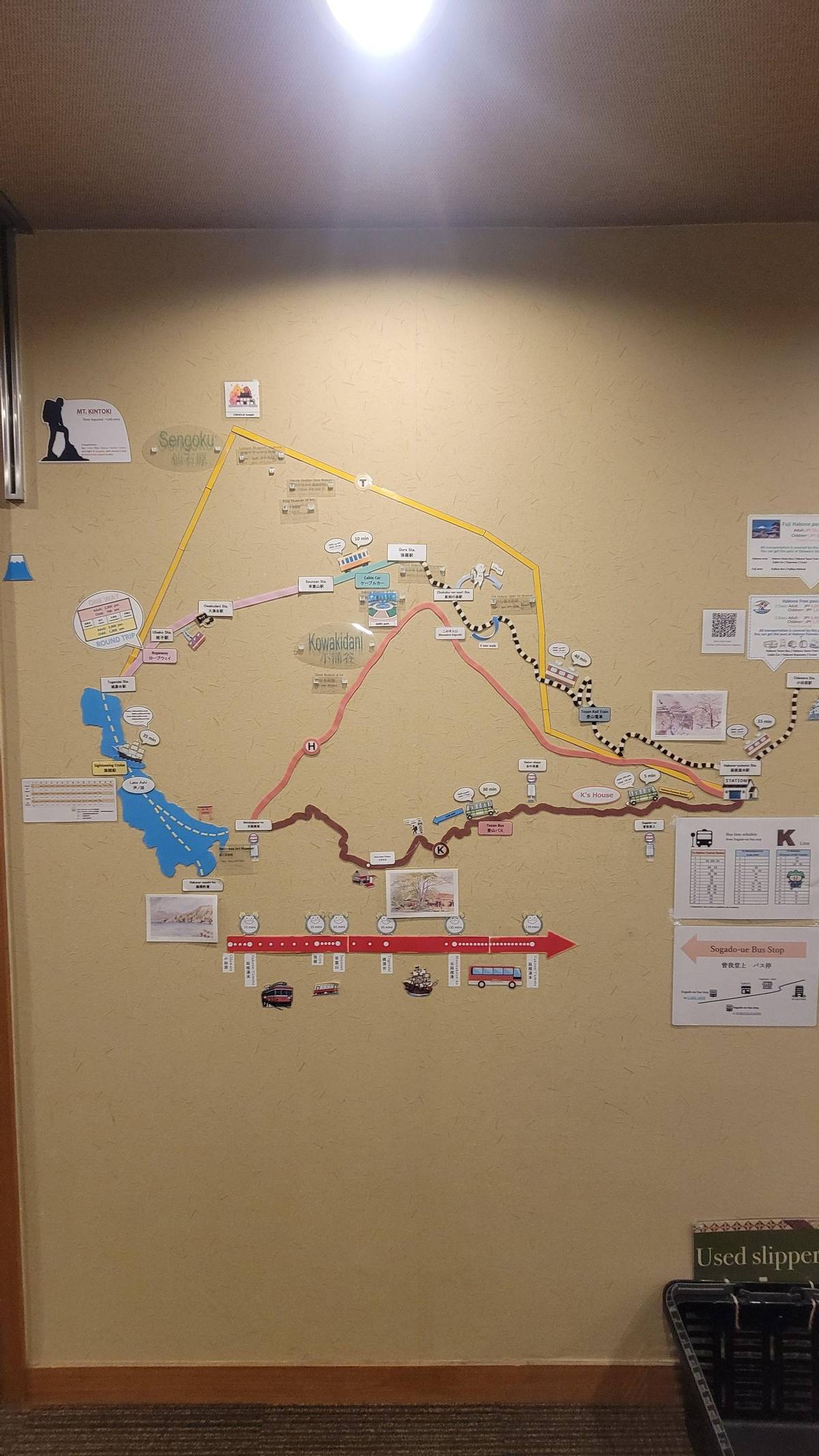
The Hakone Ropeway connects Sounzan, at the top of the cable car from Gora, with Togendai on the shore of Lake Ashi, and Owakudani is the stop in between.1 Odakyu Hakone lists four stations in all: Sounzan, Owakudani, Ubako and Togendai, with Togendai the transfer point for the cruise, the highway bus and the Tozan Bus.2 Gondolas hold 18 people and leave about every minute, so you rarely wait long for the next one.7
Passengers riding the whole line change gondolas at Owakudani, where the platforms for Sounzan and for Togendai are separate.5 You can break the journey there: Odakyu Hakone tells you to buy a ticket to your final destination and get off and on along the way.8 That is how most people visit the valley without paying twice.
How long does it take? The English pages give about 15 minutes for each section, while the Japanese page puts every section at about 10 minutes and notes that crowds can stretch the time.59 Plan on roughly half an hour from Sounzan to Togendai plus your time at Owakudani, and allow for queues on holidays. On the slope between Owakudani and Togendai the gondolas run lower over forest, and the lake grows in the windows as you descend; it is the gentler half of the ride and the one with the views most people come for.
On the line
Sounzan
About 2 minutes on foot to the ropeway.10
First section
About 130 m above the ground at one point.11
Owakudani
Separate platforms for each direction.5
Ubako
Between here and Owakudani the mountain shows.6
Togendai
About 3 minutes on foot to the cruise.12
Owakudani in Hakone is a bare, steaming slope where you can see volcanic activity from close up. Odakyu Hakone says it is thought to have formed through a phreatic eruption and pyroclastic flow almost 3000 years ago, and its old name, Jigokudani or Hell Valley, came from the smell of sulfur.1314
The Hakone Tourist Association ties the valley to the same collapse of Mount Kamiyama that dammed Lake Ashi; Owakudani is what remains visible of it.15 Between Sounzan and Owakudani the gondola passes about 130 m above the ground, with the valley floor spread out underneath.11 It is the most dramatic minute of the ride, so sit facing downhill if you can.
The station at the top was remodelled and reopened on 25 April 2025 with a new observation area called Earth Valley.16 Its Breath Deck has a glass floor and glass barrier over the fumaroles.17 The Michelin Green Guide gives Owakudani 2 stars, as the ropeway operator points out.18
Fares in yen
The stations
| Station | Connects to | Worth knowing |
|---|---|---|
| Sounzan | Cable car from Gora | Cable car platform on floor B1F |
| Owakudani | Change of gondolas | Earth Valley deck, black eggs |
| Ubako | Between valley and lake | Fuji shows on this stretch |
| Togendai | Lake Ashi cruise | Cruise counter on floor B2F |
From Odakyu Hakone's station guides and ropeway pages.19516620
Ways to ride
Ropeway onlyOne way or return
 Unlimited rides
Two-day train pass
 All in one
Ropeway and cruise
Decision helper
Choose by how much else you plan to do
One-way or return, stop-overs allowed along the line.8
The ropeway is one of the systems it covers.21
Tozan Train, cable car and the ropeway to Owakudani.22
This site's tour includes the ropeway ticket.
Large luggage is not allowed on the gondolas.23
In winter, body temperatures can drop to below freezing even during the day so please visit in warm clothing.
Every visitor ends up holding one. The Hakone black egg owes its color to the valley itself: the shell turns black through a chemical reaction with the geothermal heat and volcanic gas, as Odakyu Hakone explains.25
The eggs are sold at two shops at Owakudani, the Owakudani Kurotamagokan and Gokurakuchaya.26 A giant black egg statue stands outside, a landmark for meeting up again. The eggs make a good snack before the descent to the lake, since the ships sell only drinks and snacks.27
If you want a sit-down meal instead, the station has its own restaurant, OWAKUDANI KITCHEN, on the second floor, serving Owakudani curry with a view over the valley.28 If you plan lunch between the ropeway and the boat, eat here or at Togendai, where the View Restaurant on floor B1F, just above the cruise counter, looks out over the ships on the lake.2920
Checklist
Price calculator
Compare the e-ticket, the pass and a coach day
Total from$26
per participant from $13
Check availabilityfree cancellationEach total multiplies a listing's lowest GetYourGuide price by the number of travelers and converts it at today's ECB rate; the booking page shows the binding figure for your date.
Video
The player stays dark and sends nothing to YouTube until you start it.
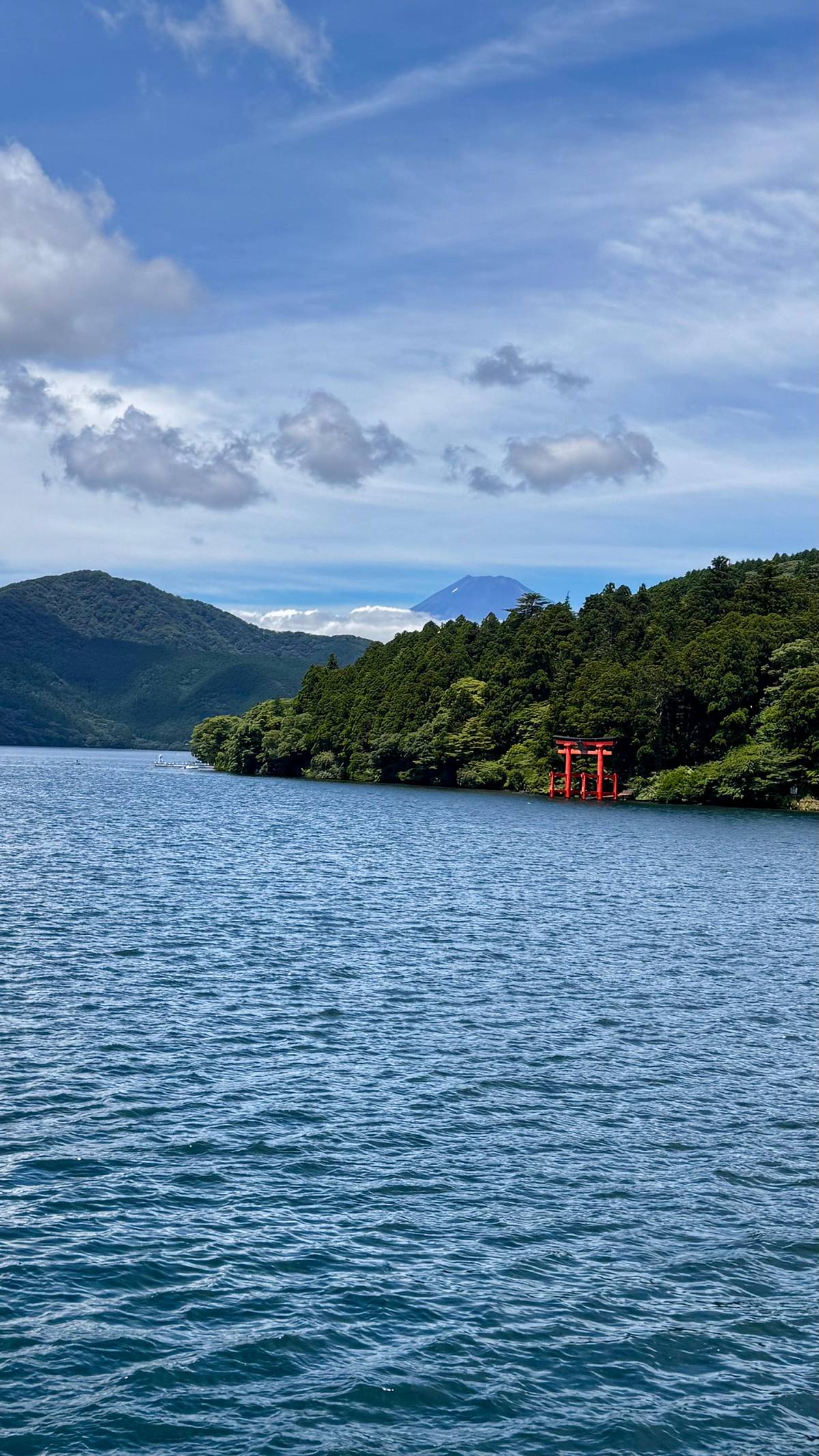
The Mount Fuji view from the Hakone Ropeway is one of the reasons people ride it. The operator names the stretches: between Ubako and Owakudani, and midway between Owakudani and Sounzan.6 Odakyu Hakone's editors add that halfway from Owakudani to Togendai a panorama opens with both the mountain and Lake Ashi.30
Timing matters more than luck. In summer the mountain is often hidden by clouds as the day warms, so the operator calls morning the best time; in winter there are comparatively more days when it can be seen during the day.31 On a clear winter evening you may even catch a red Fuji at sunset from Owakudani.32
Taken toward Togendai in the early evening, the ropeway also looks down on Lake Ashi shining below.33 If your goal is the lake rather than the volcano, ride the last section slowly in that direction and keep the camera on the lake side.
The ropeway runs from 9:00 to 17:00 between February and November and from 9:00 to 16:15 in December and January.3 Since 1 October 2025 a one-way ticket costs a flat 2,000 yen for adults and 700 yen for children, and a return costs 3,000 yen and 1,000 yen.4 These are Odakyu Hakone's published fares, read on 22 October 2026.4
GetYourGuide sells a Hakone Ropeway e-ticket, one-way or return, from $13, valid for 90 days. Its rules are worth reading: a one-way ticket works only in the direction you chose and only until the end of operating hours on the day you activate it, while a return is one ticket toward Sounzan and one toward Togendai, usable on the day of activation and the next day.
The ropeway is also covered by the Hakone Free Pass, and by the Owakudani 2-Day Pass from 3,700 yen, which includes the Tozan Train and the cable car up to Sounzan.2122 The coach day this site is built around includes a Hakone Ropeway ticket.
The ropeway halts for wind speeds of 30 m/s or more, for extreme weather and for mechanical trouble, and it closes for its annual inspection.34 Owakudani is also a live volcanic area. The operator measures gas concentrations at several points and suspends service when they rise; it stresses that these readings have no direct relation to the volcanic alert level.35
That alert level comes from the Japan Meteorological Agency, which currently rates Hakoneyama at level 1, the lowest of five.3637 It lowered the level from 2 to 1 on 7 October 2019, and it still warns that fumarolic activity is vigorous in places around Owakudani and that you should beware of volcanic gas near the vents.3839
Tour operators know this too. The coach day sold on this site says that weather, traffic or a suspension can stop an activity, that it then visits an alternative or gives a gift, and that no refund is paid for such changes. Check the status page on the morning you travel.
Large luggage is not allowed on the ropeway, so leave suitcases in a coin locker or at a station office, which charges 500 yen.2340 Wheelchair users can board in their wheelchair, and every station lends wheelchairs free of charge.41
Dress for altitude. The operator warns that in winter it can feel below freezing at Owakudani even in daytime, and Odakyu Hakone puts Lake Ashi and Owakudani about 3 to 4 degrees below Hakone-Yumoto.2442
If you drive, the Owakudani car park clogs on fine days in Golden Week, on 3-day holidays and in the autumn leaves season, and the operator suggests parking at a lower station and riding up instead.43 The autumn leaves themselves start around late October at Owakudani and last along the line to around mid-November.44
Your Hakone day
Pick a date, meet in Ginza or Shinjuku, and cancel free up to 24 hours before.
About half an hour plus stops. Each section takes about 10 to 15 minutes, and you change gondolas at Owakudani.95
Yes. Buy a ticket to your final station and get off and on along the way.8
9:00 to 17:00, shorter in winter. February to November until 17:00; December and January until 16:15.3
2,000 yen for adults. Children pay 700 yen; a return costs 3,000 yen for adults, fares since 1 October 2025.4
At two shops at Owakudani. The Owakudani Kurotamagokan and Gokurakuchaya sell them, both right by the ropeway station.26
Sometimes. The operator suspends service when measured gas concentrations rise.35
Sources
Keep reading