 Torii and Fuji
From the boat
Moto-Hakone to Togendai
- Crossing
- 25 to 35 minutes
- Fuji with
- The peace torii
- Best
- Early sailings
Guides
Language
EnglishCurrency
US dollar · $GetYourGuide uses the currency you choose.
Guide · Fuji views
Mount Fuji from Lake Ashi is the picture everyone hopes for, and cloud is the reason many leave without it. Here is where the mountain shows, what the rain record says about each month and how to tilt the odds.
Editorial team, hakonesightseeingcruise.comUpdated October 22, 2026read in 6 minutes31 sources
Quick answer
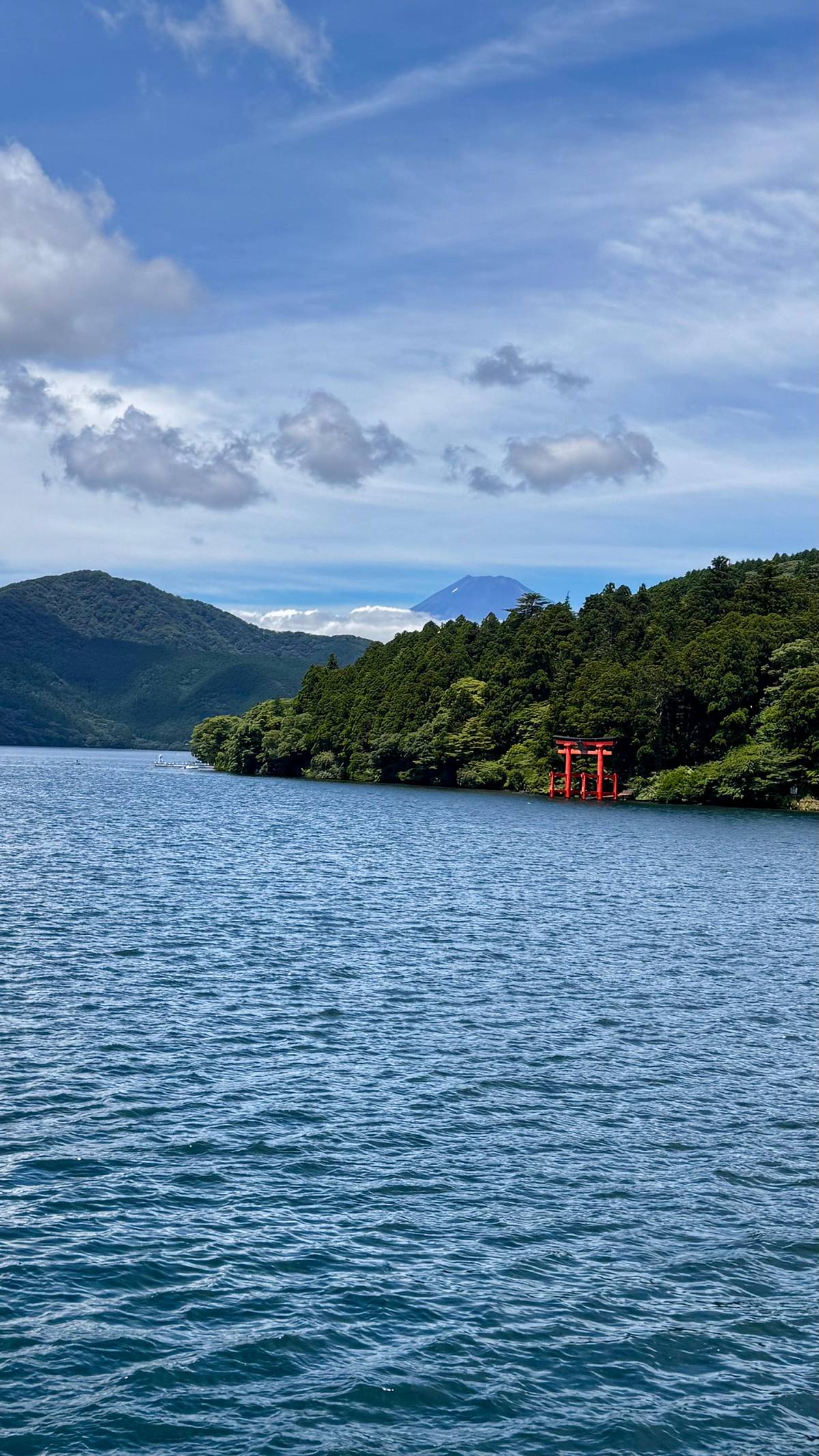
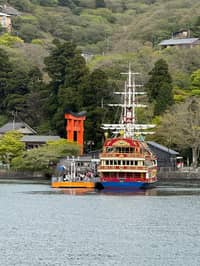
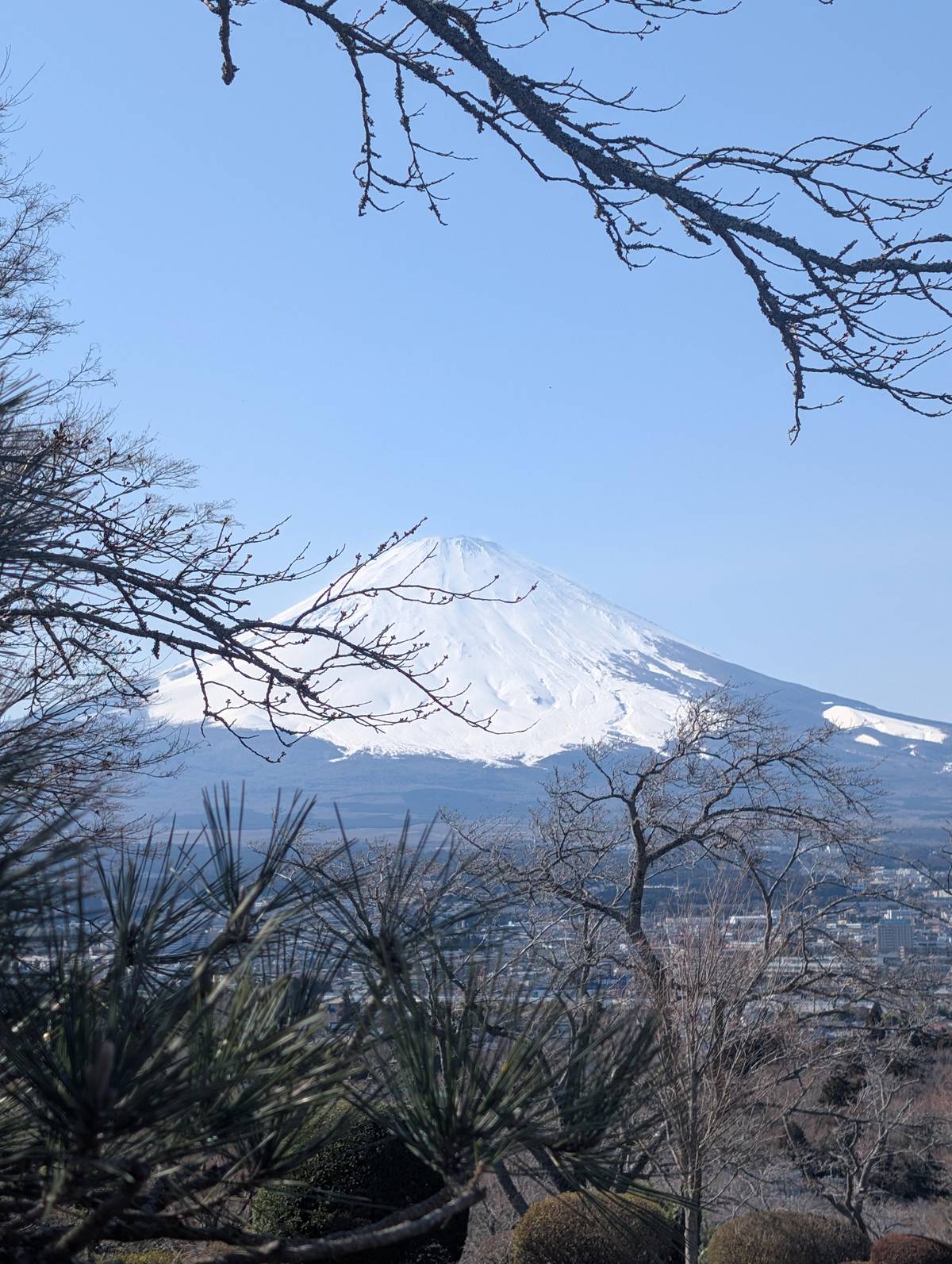
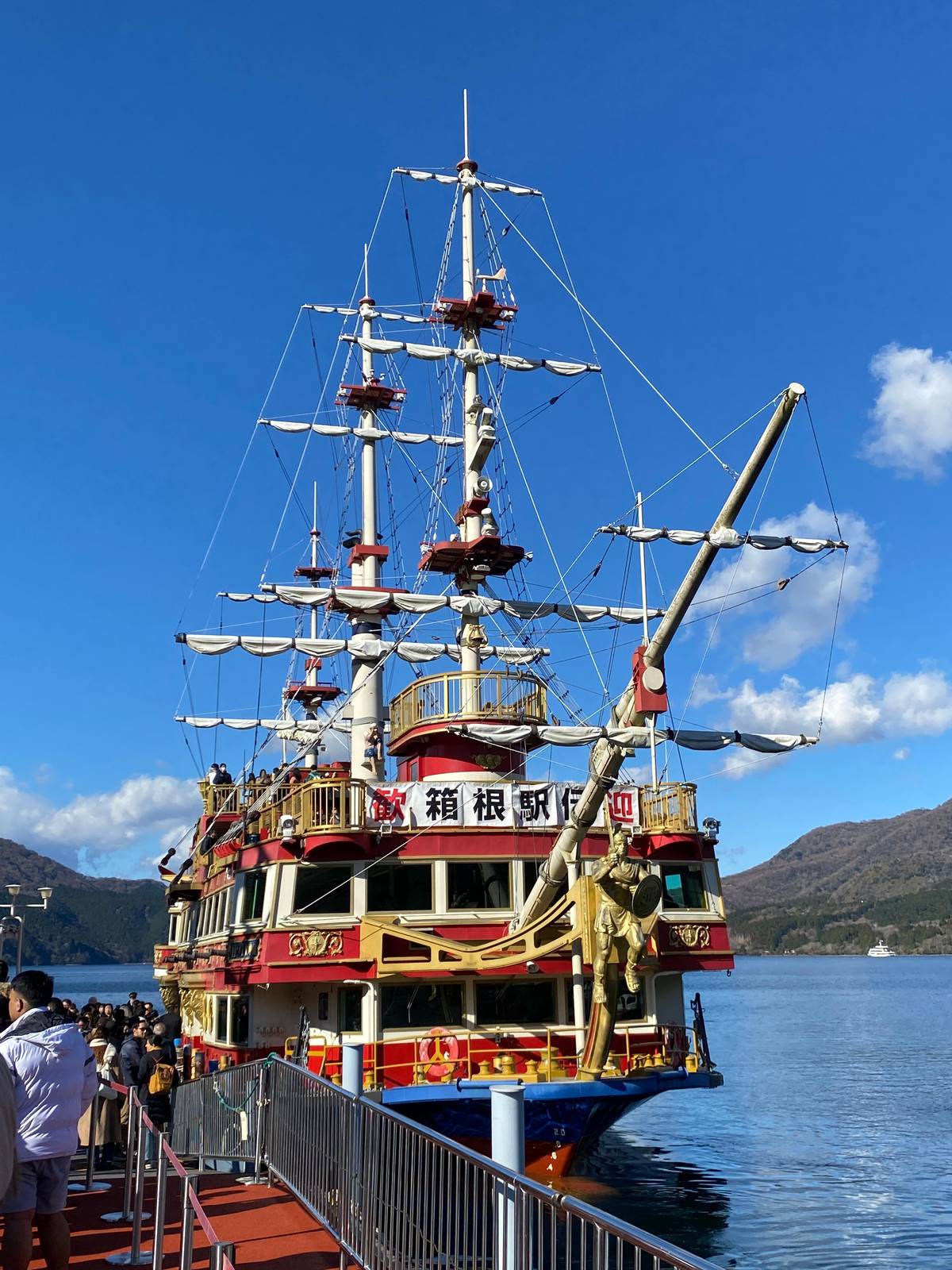
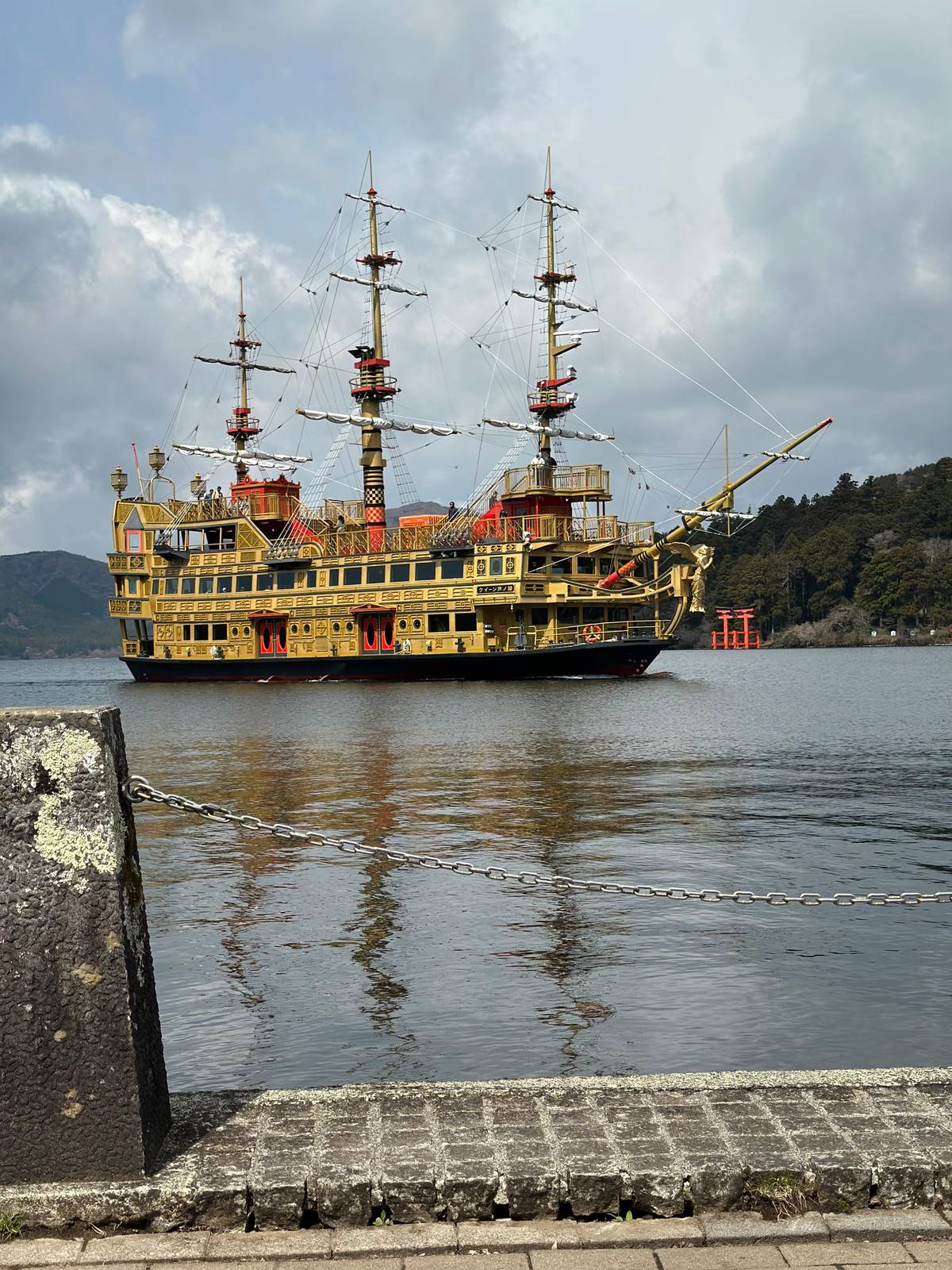
Mount Fuji from Lake Ashi appears above the low ridges at the far end of the lake, framed by forest, and on the cruise it shows best on one particular run. Odakyu Hakone's editors write that when you sail from Moto-Hakone Port toward Togendai Port you can admire both the Heiwa no Torii and Mt Fuji.1 The operator itself points out spots on the crossing where Fuji and the lakeside torii of Hakone Shrine fit into one view.4
On land, Odakyu Hakone names Motohakone and Hakonemachi-ko for fantastic views of the mountain.5 At Hakone-machi-ko the second-floor cafe of Hotoriya looks out over the lake toward Fuji, a good place to wait out a passing cloud with a coffee.6
Remember that Fuji is not in Hakone itself. It rises beyond the caldera rim to the northwest, and from the lake you see its upper slopes above the wooded hills, with the color of the snow and the sky changing through the day. On a hazy day it can fade to a faint outline even when the sky above the lake is blue, so a clear blue sky alone is no guarantee.
A clear-day plan
Early morning
The still lake can mirror the mountain.7
First boats
The torii and Fuji appear on this run.1
Late morning
Fuji shows between Ubako and Owakudani.8
Afternoon
One of Kanagawa's 50 picturesque sights.9
Winter sunset
A red Fuji on a beautiful winter sunset.10
No, and no tour can promise it. Several listings that include Lake Ashi say plainly that visibility of Mt. Fuji depends on the weather and is not guaranteed, including the day trip from Shinjuku that spends an hour on the lake.
The reason is the season. The ropeway operator explains that in summer the temperature rises during the day and Fuji is hidden by clouds, so the morning is the best time to look, and that in winter, with lower temperatures, there are comparatively more days when it can be seen during the day.2
So the honest answer is: often, but not reliably, and much more often in winter than in summer. Planning an early boat or an early ropeway ride in the warm months is a simple change that helps.
Month by month
The climate
| Month | Daylight (h) | Darkness (h) | High / low | Wet days | On the lake |
|---|---|---|---|---|---|
| Jan | 10 | 14 | 8 / -2 °C | 8 | Winter timetable |
| Feb | 10.9 | 13.1 | 9 / -1 °C | 9 | Winter timetable |
| Mar | 11.9 | 12.1 | 12 / 2 °C | 13 | Cherry blossoms |
| Apr | 13 | 11 | 17 / 7 °C | 13 | Azaleas |
| May | 14 | 10 | 21 / 12 °C | 13 | Azaleas |
| Jun | 14.5 | 9.5 | 24 / 16 °C | 16 | Hydrangeas |
| Jul | 14.3 | 9.7 | 27 / 20 °C | 16 | Lake Festival |
| Aug | 13.5 | 10.5 | 29 / 21 °C | 13 | Fireworks week |
| Sep | 12.5 | 11.5 | 26 / 18 °C | 15 | Silver grass |
| Oct | 11.4 | 12.6 | 20 / 12 °C | 13 | Fall colors |
| Nov | 10.3 | 13.7 | 15 / 6 °C | 10 | Fall colors |
| Dec | 9.8 | 14.2 | 10 / 1 °C | 7 | Winter timetable |
Daily highs and lows: Gotemba; rainy days from 1 mm: the Hakone gauge, both Japan Meteorological Agency normals for 1991 to 2020. Day length at mid-month is computed by us, not measured.3 Season according to Odakyu Hakone (Hakone Navi).31
Viewpoints
Torii and FujiMoto-Hakone to Togendai
 Free entry
Southern shore
 Highest view
Above Hakone-en
Decision helper
Small changes that make a clear view more likely
Clouds build as the day warms, so mornings are best.2
The fewest rainy days of the year at Hakone.3
The run with the torii and Fuji in view.1
The peak can show again on clear spells.9
A red Fuji appears on beautiful winter sunsets.10
In the summer the temperature rises in the day so it is hidden by clouds so the morning is the best time to view.
No agency publishes a count of days when Fuji is visible from the lake, so the best proxy is the rain record. The Japan Meteorological Agency's Hakone rain gauge, inside the caldera, logs 16 days with 1 mm of rain or more in both June and July, the rainy season.3 September follows with 15 rainy days.3
The other end of the year is drier. December has 7 rainy days, January 8 and February 9.3 Those are also the months the ropeway operator associates with clearer daytime views, and Odakyu Hakone's editors add that the winter air is so clear that it allows a wider view than you would imagine.11
Spring and autumn sit in between, with around 13 rainy days in most of those months.3 They bring their own reasons to go, from azaleas to fall colors, but Fuji is a matter of luck on the day. The month chart and table on this page show the full year, with day length that we calculate ourselves rather than measure.
Checklist
Price calculator
Compare tours with time on Lake Ashi for your group
Total from$164
per participant from $82
Check availabilityfree cancellationEach total multiplies a listing's lowest GetYourGuide price by the number of travelers and converts it at today's ECB rate; the booking page shows the binding figure for your date.
Video
The player stays dark and sends nothing to YouTube until you start it.
Early mornings are worth the effort. Odakyu Hakone's editors describe the still surface of Lake Ashi in the early morning mist mirroring Mount Fuji, and suggest visiting the lake early for that reason.7 The first boats of the day are also the ones least affected by the clouds that build as the land warms.
Evenings have their own reward. On a beautiful winter sunset the ropeway operator says a red Fuji can be seen from Owakudani.10 Combine that with the shorter winter hours: the ropeway closes at 16:15 in December and January, so a sunset there needs careful timing.12
Day length sets the frame. In December the sun is above the horizon for about 9.8 hours at mid-month, and in June for about 14.5 hours, figures we calculate for the lake's latitude.3 Winter mornings start later and evenings come early, which brings the clear hours and the boat timetable closer together. Dress for the deck as well: Odakyu Hakone says the lake and Owakudani are usually about 3 to 4 degrees cooler than Hakone-Yumoto, and at Gotemba, the agency station whose temperatures we use, the average January low is -1.9 °C.133
Fuji is the headline, but the foreground changes through the year too. Around Hakone the cherry season falls in late March and early April, with azaleas in flower through to late May.14 From the ropeway, the operator lists Fuji cherry from April into May and hydrangeas and dogwood from June to July.15
Autumn is the season with the most color under the mountain. The leaves start around late October at Owakudani and last along the ropeway to around mid-November, while across Hakone the fall colors run from early October to early December.1617 The silver grass of Sengokuhara, early September to early November, adds a gold layer to the slopes north of the lake.18
Winter brings snow on Fuji and sometimes on the hills around the lake as well; Odakyu Hakone notes snowy days in Hakone in that season.19 The ships keep sailing on their winter timetable from 1 December to 19 March, so the clearest months are also the ones with slightly longer crossings.20
If the boat leaves you without a view, try the land. From Onshi Hakone Park, a former imperial villa on the southern shore, the peak of Fuji shows on clear days, and Kanagawa counts the view among its 50 picturesque sights.9 The park was built in 1886 and is now free to enter.2122
The Narukawa Art Museum near Moto-Hakone frames the lake and the mountain through an observation window 50 meters long.23 Higher up, Mount Taikanzan at 1,015 m looks over Lake Ashi and Fuji.24
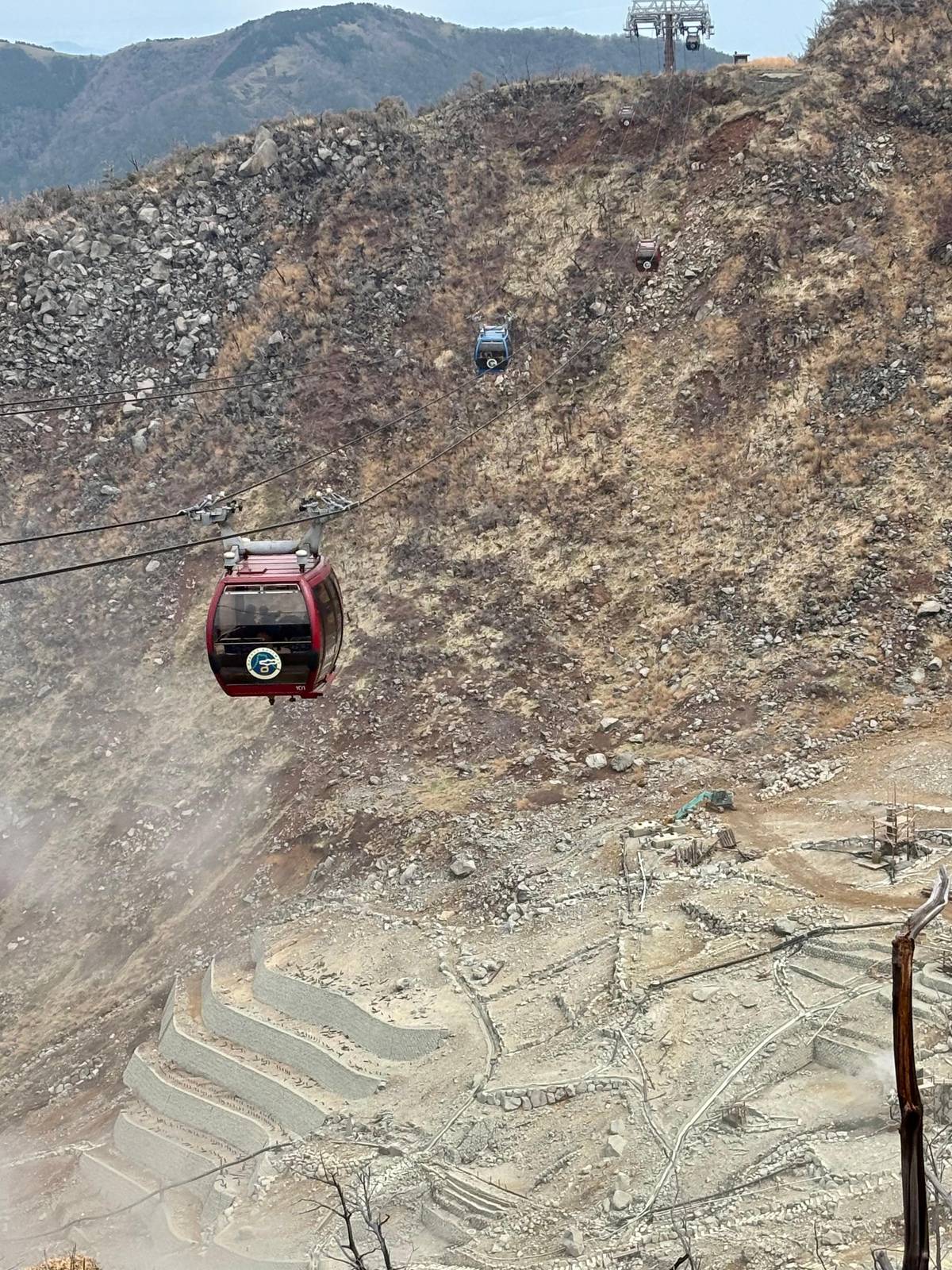
On the east shore, the Komagatake ropeway climbs from Hakone-en to the summit, from where its operator lists Fuji among the views.25 And the Hakone Ropeway shows Fuji between Ubako and Owakudani and halfway down toward Togendai.826
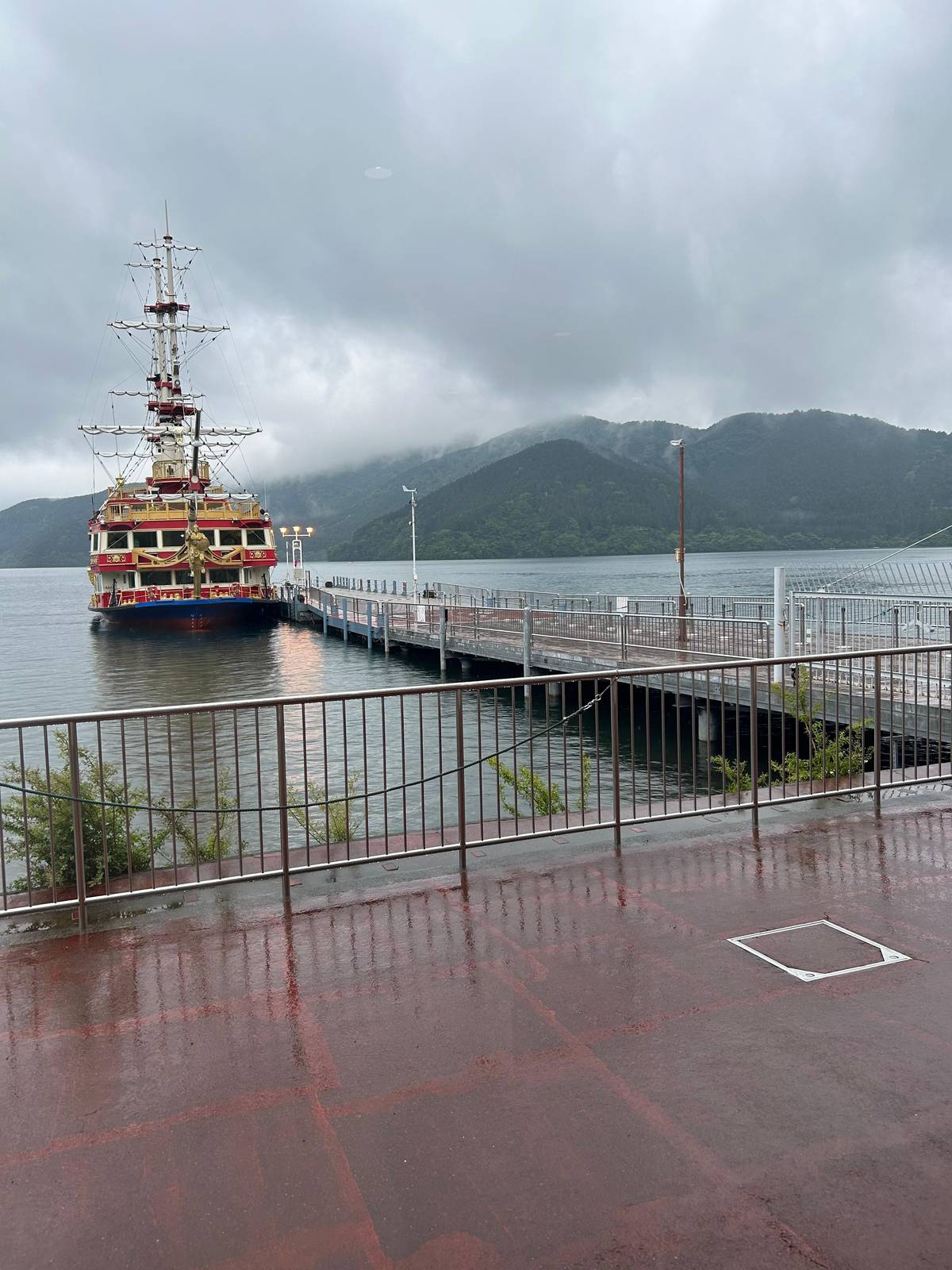
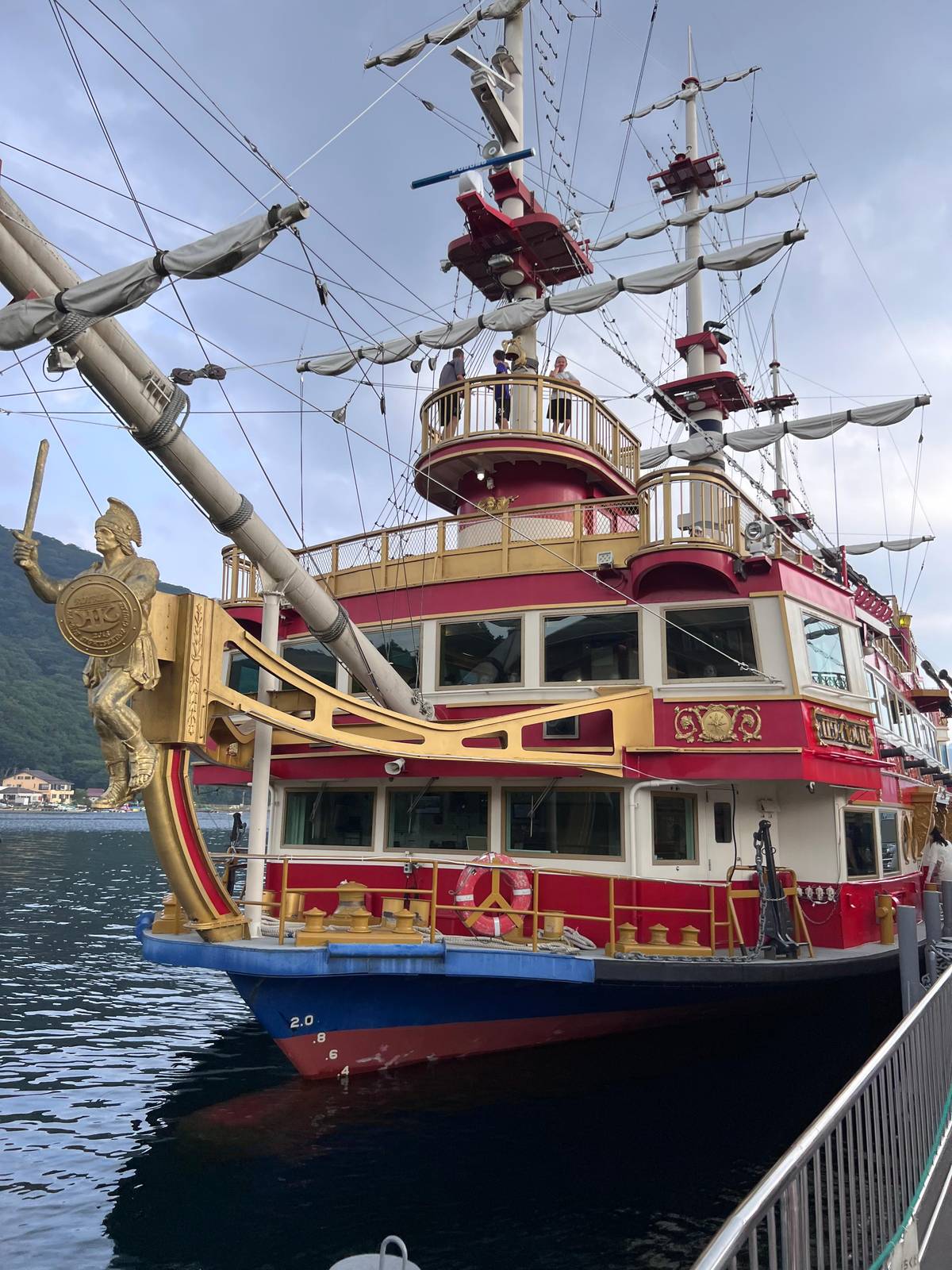
A cloudy day at the lake is still a good day. Hakone Shrine and the peace torii stand a short walk from Moto-Hakone-ko, and the torii in the water is just as striking under a grey sky.2728 Our Hakone Shrine page explains the gates, the steps and the dragon shrine. From the boat you still see the shrine woods, the wooded headland of Onshi Hakone Park and the slopes of the caldera rim, which have their own atmosphere when low cloud drifts across them.
Owakudani is worth the ropeway ride in any weather, as long as the gondolas run: the steaming valley is the point, not the distant mountain.29 And if rain sets in, the Narukawa Art Museum near Moto-Hakone holds more than 4,000 contemporary Japanese paintings to look at instead.30
Keep the tour's own rules in mind. The coach day this site is built around says that when weather or traffic stops an activity it visits an alternative place or gives a gift, without a refund for the change. Clouds over Fuji are not such a change: the boat still sails, only the view is missing.
Your Hakone day
Pick a date, meet in Ginza or Shinjuku, and cancel free up to 24 hours before.
No. Cloud often hides it, especially on summer afternoons; tours say visibility is not guaranteed.2
Moto-Hakone toward Togendai. On that run you can see both the Heiwa no Torii and Mt Fuji.1
December to February. The Hakone gauge logs 7, 8 and 9 rainy days in December, January and February.3
June and July. Each sees 16 wet days on the Hakone gauge, the heart of the rainy season.3
Yes, in summer. The ropeway operator says clouds build as the day warms, so morning is best.2
Fuji glowing at sunset. On beautiful winter sunsets the operator says a red Fuji can be seen from Owakudani.10
Sources
Keep reading